- Published on
SOC 2 Evidence Collection: Or, How I Stopped Dreading Audit Season
- Authors

- Name
- Kunj Patel
- @kunjpatel410/
Every SOC 2 cycle started the same way: an auditor asks for “evidence that MFA is enforced,” and I spend the next three days frantically taking screenshots of consoles I haven’t logged into since the last audit. So I automated the whole thing.
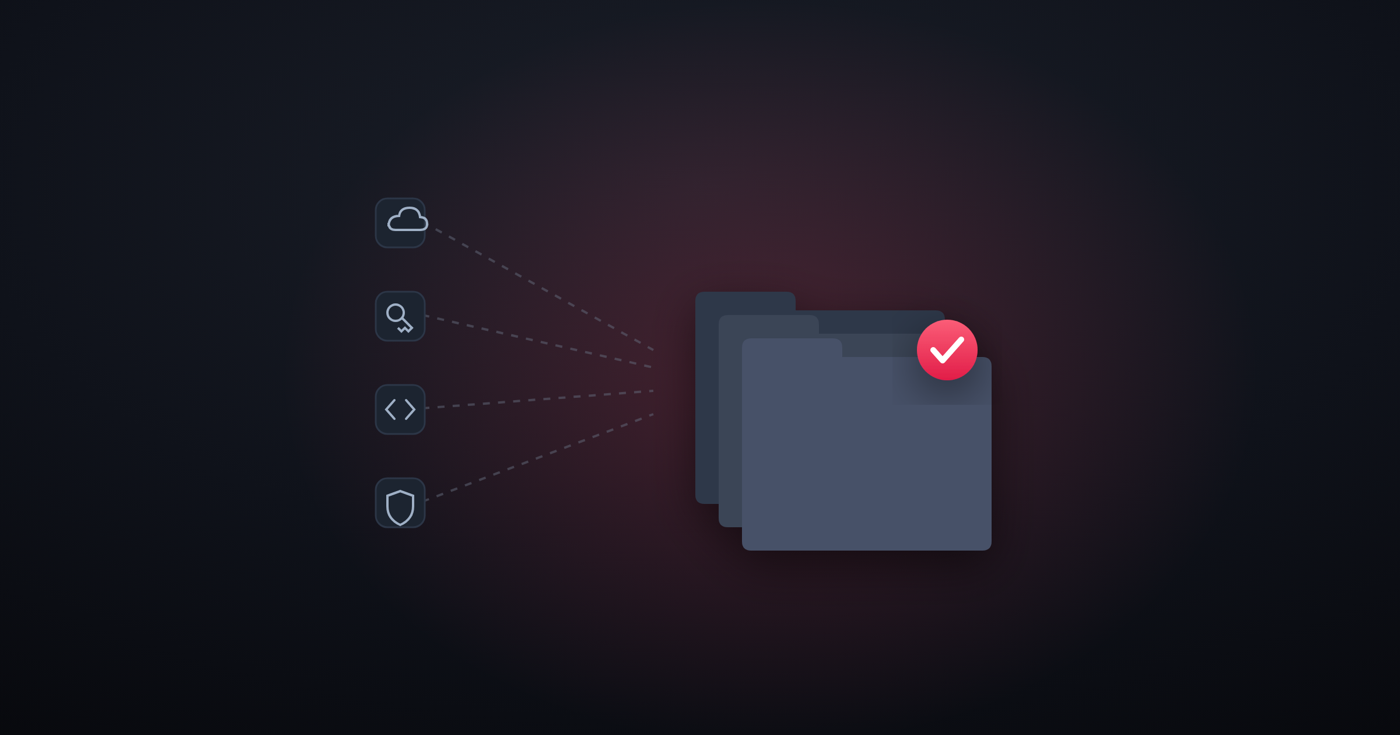
Why Pre-Audit Panic Is a Solvable Problem
SOC 2 is mostly about proving that the controls you say you have are the controls you actually have, on an ongoing basis. The trouble is that “ongoing basis” usually translates to “whatever state the system happened to be in the week the auditor showed up.” That’s a bad way to run a control program, and an even worse way to spend a week.
The insight is simple: the evidence an auditor wants — MFA enforcement, IAM policies, branch protection, password settings — already lives in APIs. Nobody needs to manually screenshot the Okta admin panel. A console screenshot is just a (worse) rendering of a JSON blob you can fetch on a schedule.
So instead of collecting evidence before the audit, I collect it continuously. By the time the auditor asks, the answer is “here’s the folder.”
- AWS — IAM policies, account password policy, root MFA: the access and config controls.
- Okta — MFA enforcement, password policy, sign-on rules, group memberships.
- GitHub — branch protection, org member access, 2FA status.
- CrowdStrike — endpoint coverage and policy, for the “every host is actually protected” control.
- Proofpoint — email security and anti-phishing controls.
Between them they cover the controls auditors hammer on every cycle — access controls, MFA, security-policy enforcement, endpoint protection — and each source has a clean API, so the whole thing is a few hundred lines of Python on a scheduler.
Setup: Credentials and a Dated Folder Convention
The first design decision was where evidence goes. Auditors think in time windows (“show me the state as of Q1”), so the layout mirrors that — one dated folder per run, never overwritten, mirrored to S3 so the record is durable and immutable. That dated prefix in the bucket is the audit trail.
from datetime import date
from pathlib import Path

def run_dir(base: str = "evidence") -> Path:
    # One immutable folder per collection run.
    # Auditors love a timestamp they can point at.
    today = date.today().isoformat()  # 2026-06-10
    out = Path(base) / today
    out.mkdir(parents=True, exist_ok=True)
    return out
Credentials come from environment variables, because hardcoding an AWS key into your compliance tooling is the kind of irony that ends up in someone else’s blog post. Each integration gets a read-only, least-privilege credential — the collector should never be able to change the thing it’s auditing.
import os

def env(name: str) -> str:
    val = os.environ.get(name)
    if not val:
        raise RuntimeError(f"Missing required credential: {name}")
    return val

OKTA_TOKEN = env("OKTA_API_TOKEN")
GITHUB_TOKEN = env("GITHUB_TOKEN")
# AWS creds are picked up by boto3 from the standard chain.
Pulling Evidence From Each Source
The collectors are deliberately boring. Each one hits an API, gets back JSON, and writes it to disk verbatim. No transformation, no opinions — the raw response is the evidence, and the less I massage it, the harder it is for anyone to argue I cooked the books.
Here’s the Okta one, grabbing the password policies that prove the “we enforce strong passwords” control:
import json
import requests

def collect_okta(out_dir, org_url: str, token: str):
    headers = {"Authorization": f"SSWS {token}"}
    # Policy types map to specific SOC 2 controls (MFA, password strength, etc.)
    for policy_type in ("OKTA_SIGN_ON", "PASSWORD", "MFA_ENROLL"):
        resp = requests.get(
            f"{org_url}/api/v1/policies",
            params={"type": policy_type},
            headers=headers,
            timeout=30,
        )
        resp.raise_for_status()
        dest = out_dir / f"okta_{policy_type.lower()}.json"
        dest.write_text(json.dumps(resp.json(), indent=2))
AWS is similar, except boto3 does the credential plumbing for me. The interesting bit is grabbing IAM account-level settings — the password policy and whether root has MFA — which auditors ask about every single time:
import json
import boto3

def collect_aws(out_dir):
    iam = boto3.client("iam")

    # Account password policy
    policy = iam.get_account_password_policy()["PasswordPolicy"]
    (out_dir / "aws_password_policy.json").write_text(json.dumps(policy, indent=2))

    # Credential report: per-user MFA, key age, last-used, etc.
    iam.generate_credential_report()
    report = iam.get_credential_report()["Content"]
    (out_dir / "aws_credential_report.csv").write_bytes(report)
And GitHub, for branch protection — the “no, you can’t push straight to main, here’s proof” control:
import json
import requests

def collect_github(out_dir, org: str, repos: list[str], token: str):
    headers = {
        "Authorization": f"Bearer {token}",
        "Accept": "application/vnd.github+json",
    }
    for repo in repos:
        resp = requests.get(
            f"https://api.github.com/repos/{org}/{repo}/branches/main/protection",
            headers=headers,
            timeout=30,
        )
        # A 404 here is itself evidence (unprotected branch) — record, don't crash.
        # (Yes, a 5xx gets written too. A real run wants to distinguish those —
        #  see the limitations section, where I confess to exactly that.)
        dest = out_dir / f"github_{repo}_branch_protection.json"
        dest.write_text(json.dumps(resp.json(), indent=2))
That last comment is the one I’m proudest of: a missing protection rule is a finding, not a bug. The collector records reality, whatever reality happens to be.
Putting It on a Schedule
A collector you have to remember to run is just a more elaborate fire drill. The whole point is that it runs itself. The orchestration is a thin main() that fans out to each source — the CrowdStrike and Proofpoint collectors are the same shape as the three above, just a different API and JSON — drops everything in today’s dated folder, and mirrors it to S3:
def main():
    out = run_dir()                      # local staging, e.g. evidence/2025-10-27/
    collect_aws(out)                     # access + config controls
    collect_okta(out, org_url=env("OKTA_ORG_URL"), token=OKTA_TOKEN)   # MFA, password, sign-on
    collect_github(out, org=env("GITHUB_ORG"),
                   repos=env("GITHUB_REPOS").split(","), token=GITHUB_TOKEN)
    collect_crowdstrike(out, token=env("FALCON_TOKEN"))    # endpoint coverage + policy
    collect_proofpoint(out, token=env("PROOFPOINT_TOKEN"))  # email security controls

    upload_to_s3(out, bucket=env("EVIDENCE_BUCKET"))  # immutable, dated S3 prefix
    print(f"Evidence collected -> s3://{env('EVIDENCE_BUCKET')}/{out.name}/")

if __name__ == "__main__":
    main()
Then cron runs it nightly and you forget about it. The cadence is a judgment call: too frequent and you’re drowning in near-identical snapshots, too sparse and you’ve got blind spots between runs where a control could quietly drift. Nightly is the sweet spot for us — fresh enough that drift surfaces within a day, cheap enough that S3 doesn’t notice. The dated-folder convention pays off here — because nothing is ever overwritten, every run is additive, and the only cost of running more often is disk space.
By audit time you’ve got a stack of dated folders, each a frozen snapshot of your control posture on that day. When the auditor scopes a date range, you hand over the matching folders and go back to actual work. The first time you do this instead of opening fourteen browser tabs, it feels slightly illicit — like you got away with something. You didn’t. You just stopped doing the part that was never worth doing by hand.
Why This Matters
The business value isn’t really “saved a few days of screenshots” (though it did). It’s that evidence collection went from a point-in-time scramble to a continuous record. If a control quietly breaks in March — someone disables branch protection, MFA enforcement gets loosened — there’s a dated artifact showing exactly when it happened, instead of discovering it under an auditor’s gaze.
It’s not magic, and there are real gaps. Some controls genuinely can’t be reduced to an API call (physical security, vendor reviews, the human-process stuff), so those still need a person. The raw-JSON approach is auditor-honest but not auditor-friendly — nobody wants to read a credential report CSV, so there’s a case for a thin summary layer on top. The GitHub collector cheerfully writes a 5xx body to disk as if it were evidence, which means “no error logged” isn’t the same as “control verified” until I add real status-code handling. And “it runs on a schedule” is doing a lot of trust-me work until you’ve got alerting on the runs that fail silently.
Still: I haven’t taken a panicked console screenshot in a long time. What’s the most embarrassing thing your last audit caught that an automated snapshot would’ve flagged months earlier?